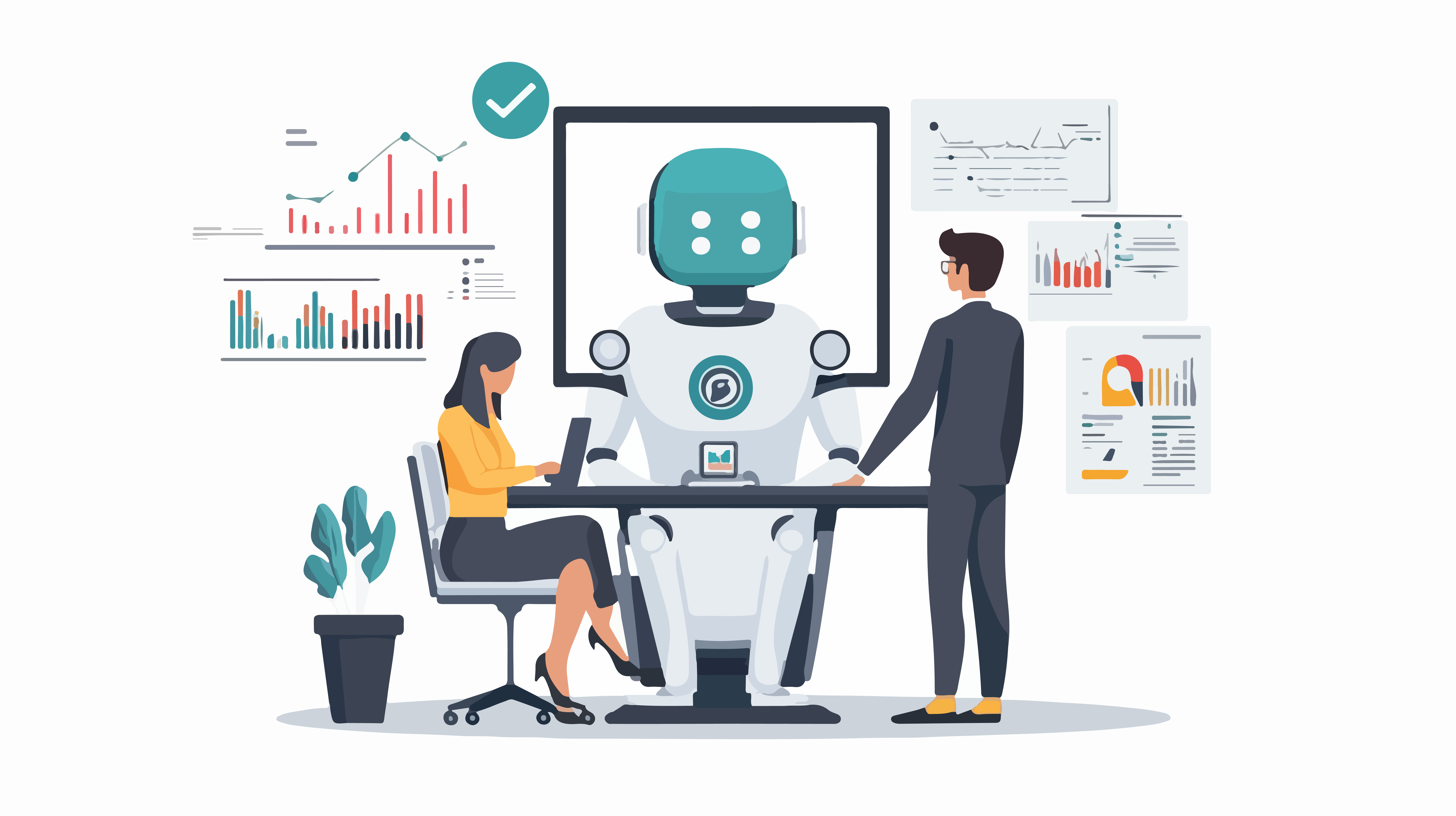
There is a subtle shift happening in boardrooms today. AI is no longer being discussed as an emerging capability or a future bet. It has already entered the operating layer of businesses. Teams are using it, outputs are faster, and expectations have quietly escalated. In many advisory conversations, the question is no longer whether AI should be adopted, but how much more can be done with it. And yet, beneath this momentum sits a more grounded truth. AI is not transforming businesses on its own. It is amplifying what already exists. Where systems are strong, it accelerates outcomes. Where clarity is missing, it exposes gaps faster. This is precisely where corporate advisory finds itself at an inflection point. The conversation is no longer about enabling adoption. It is about ensuring that AI fits into the way decisions are made, risks are evaluated, and growth is pursued. Because the real advantage today is not access to AI. It is the ability to integrate it meaningfully.
The Current State of AI Adoption in Corporate Environments
The scale of AI adoption, especially in India, is significant and continues to accelerate. According to Ernst & Young, India currently leads globally on what it terms the “AI Advantage” index, scoring 53 compared to a global average of 34, reflecting stronger realised impact of AI in the workplace . Around 62% of Indian employees are already using generative AI at work regularly, while 86% report a positive impact on productivity and 75% believe it enhances decision-making .
At a global level, adoption is even broader. Nearly 88% of employees are now using AI in some form in their daily work. However, the depth of usage remains limited. Most of this adoption is concentrated around basic applications such as search, summarisation, and drafting, while only about 5% of employees are leveraging AI in ways that truly transform how work is executed .
This creates a critical distinction for businesses. Adoption is high. Transformation is not.
From an advisory perspective, this gap is not technological. It is organisational. It reflects a lack of alignment between tools, talent, and decision-making frameworks. It also signals that businesses are still in the early phases of extracting strategic value from AI.
Where AI is Creating Real Value and Where It Is Not
When we step back and observe actual deployments across India and global markets, certain patterns begin to emerge with clarity.
AI is delivering measurable gains in structured environments. In India’s IT and services ecosystem, productivity improvements of up to 43% to 45% are expected over the next few years as AI becomes more deeply embedded into workflows . At a task level, nearly 24% of work activities across industries have the potential for full automation, with high-impact gains visible in areas such as customer service and software development . In fact, some enterprise-level implementations have already demonstrated reductions of over 30% in cycle times for technical processes such as code reviews .
At the same time, the limitations are equally visible.
A significant proportion of organisations are unable to fully realise AI’s benefits. Research from Ernst & Young indicates that companies are missing up to 40% of potential productivity gains due to gaps in talent readiness, training, and organisational alignment . Additionally, nearly 37% of employees express concern that overreliance on AI could erode their skills, while 64% report increased workloads despite AI adoption .
There are also real financial implications. A global survey of large enterprises found that most organisations deploying AI have experienced some form of financial loss in early stages due to flawed outputs, compliance gaps, or bias-related issues .
What this points to is not a failure of AI, but a mismatch in expectations. AI performs best in environments where data is structured, variables are known, and outcomes can be modelled. Corporate advisory, however, often operates in environments defined by ambiguity, incomplete information, and strategic uncertainty.
Where AI Fits vs Where Human Judgment Leads
| Area | Where AI Adds Value | Where It Falls Short | Why Human Intelligence Still Leads |
|---|
| Due Diligence | Rapid data processing, document review, anomaly detection | Misses context behind irregularities, cannot assess intent | Interpreting red flags, assessing founder credibility, understanding deal nuances |
|
|
|
|
| Financial Analysis | Forecasting, scenario modelling, trend identification | Over-reliance on historical data, limited in volatile markets | Applying market intuition, adjusting for external uncertainties |
|
|
|
|
| Risk Assessment | Pattern recognition, flagging compliance gaps | Cannot fully capture evolving regulatory or geopolitical risks | Contextual judgment, forward-looking risk anticipation |
|
|
|
|
| Strategy Formation | Data-backed insights, market research synthesis | Lacks originality, struggles with ambiguity and contrarian thinking | Defining vision, making bold calls, navigating uncertainty |
|
|
|
|
| Operational Efficiency | Process automation, workflow optimisation | May optimise for efficiency over practicality | Aligning efficiency with real business constraints and culture |
|
|
|
|
| Customer Insights | Behaviour analysis, segmentation, predictive trends | Cannot fully understand emotional or cultural drivers | Interpreting human behaviour, brand positioning decisions |
|
|
|
|
| Decision-Making | Provides options and simulations | Cannot take accountability or make final calls | Ownership, accountability, and experience-driven decisions |
|
|
|
|
What Businesses Need to Focus on Now
The shift from adoption to integration is where most businesses will either create long-term advantage or fall into inefficiency.
First, there is a growing need to prioritise use cases rather than expand them. Many organisations are experimenting across multiple areas without clear ROI frameworks. The more effective approach is to identify high-impact functions where AI can deliver measurable outcomes and build depth there.
Second, talent is emerging as the biggest constraint. Nearly 97% of executives in India cite lack of talent as a key hurdle in scaling AI adoption . Without investment in skills, training, and role evolution, even the most advanced tools fail to deliver sustained value.
Third, governance is becoming central to AI strategy. As AI moves closer to decision-making layers, businesses are being forced to build stronger oversight mechanisms around data usage, model outputs, and accountability structures. This is particularly critical in sectors such as finance, healthcare, and regulated industries.
Fourth, there is a clear shift from standalone tools to embedded systems. AI is no longer being treated as a separate capability. It is being integrated into existing workflows, systems, and decision frameworks. This is where the real value begins to compound.
Finally, there is an increasing recognition that AI does not reduce the need for human intelligence. It amplifies the need for it. As outputs become faster and more abundant, the ability to interpret, filter, and act on those outputs becomes a defining capability.
The Evolving Role of Corporate Advisory
Corporate advisory itself is undergoing a quiet but significant transformation.
Earlier, the focus was on frameworks, benchmarking, and execution support. Today, the role is expanding into something more fundamental. It is about helping businesses understand where AI fits within their operating model, where it introduces risk, and where it should not be relied on yet.
This includes:
- Designing AI-aligned operating models
- Building governance and risk frameworks
- Identifying high-impact use cases
- Aligning talent strategy with technology adoption
- Ensuring that decision-making processes remain robust
In essence, advisory is becoming the bridge between AI capability and business reality.
Conclusion: The Balance That Will Define Competitive Advantage
AI is not replacing corporate advisory. It is redefining its boundaries. It brings speed, scale, and analytical depth. It enhances productivity and opens new possibilities. But it does not replace judgment. It does not understand context beyond data. And it does not carry accountability. That responsibility remains human. India’s position as a global leader in AI adoption shows that the opportunity is real and immediate. But the data also makes one thing equally clear. The organisations that succeed will not be the ones that adopt AI the fastest, but the ones that integrate it most thoughtfully. Because in the end, AI can inform decisions, accelerate processes, and expand possibilities. But it is human intelligence that defines direction, makes trade-offs, and carries the weight of outcomes. And that is what will continue to shape corporate advisory in the years ahead.
Sources and References
Ernst & Young – India AI Advantage Survey 2025
Ernst & Young – Work Reimagined Survey 2025 (Global AI usage and productivity gap)
Ernst & Young – AIdea of India Report (Productivity, jobs, talent gaps)
Reuters – AI-related financial risks and losses in enterprises
Reuters – AI productivity gains in India IT sector
Academic research on AI productivity and enterprise deployment challenges